We live in a world of instant gratification. We’re all guilty of wanting that instant beauty fix, perfect skin in under 30 minutes, and quick results. And while some treatments do provide that instant glow, many of the more advanced skin treatments require some necessary downtime to deliver deeper results.
At Pure Perfection, we believe in science backed treatments, with or without downtime, that deliver results. In this article, we explain why downtime after treatments is often a benefit, and not something to fear.
What does downtime mean?
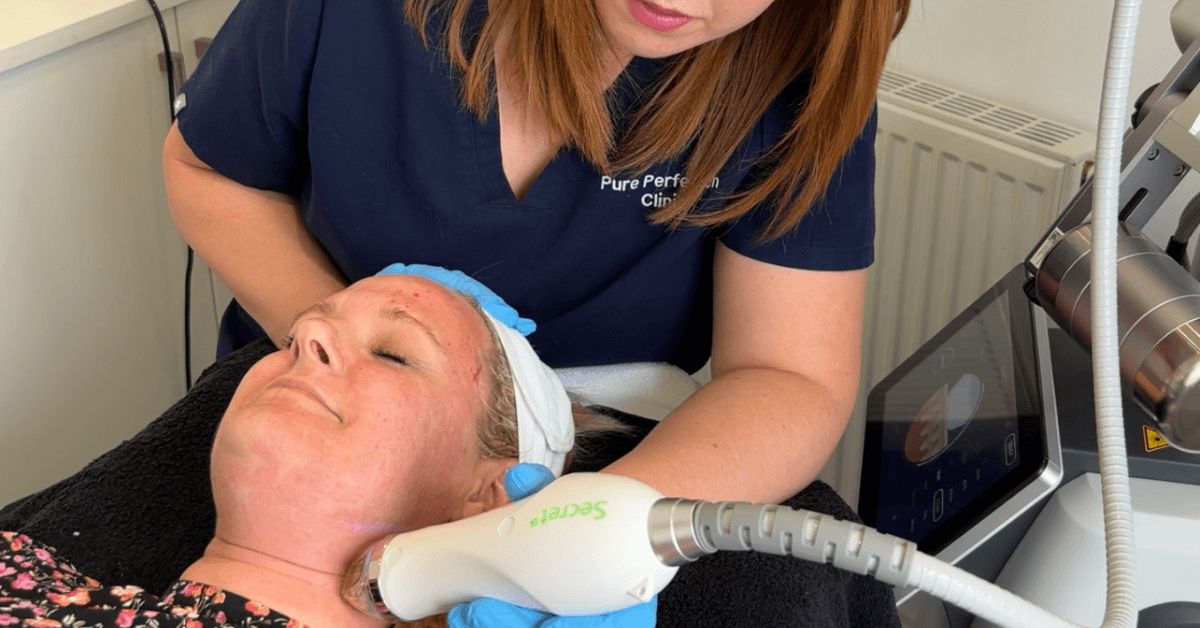
When talking about skincare, downtime is the recovery time for your skin after an advanced or medical skin treatment. For example, some treatments may result in skin redness, peeling, dryness or swelling after the session and may take a few days to recover.
Some beauty treatments such as a relaxing spa facial, would only treat at surface level and therefore wouldn’t result in any downtime. However, if you’re having a clinic treatment which results in longer-term results such as microneedling, CO2 laser or chemical peels, your skin would need time to repair and heal.
Why downtime is a positive sign
Having a treatment without any downtime is always a selling point, but there are those treatments that are worth the long-term skin investment to truly transform the skin’s appearance or to get visible results.
Deeper treatments: Treatments that penetrate deeper into layers of the skin are often delivering cellular changes and usually have more lasting results compared with superficial treatments that provide a short term glow or relaxing experience.
Long-term results: Having a response to treatment such as redness and requiring downtime is usually a sign that changes have occurred to your skin such as stimulating collagen and it needs time to rebuild and repair itself.
Why retinol can cause skin to react
Retinol is a type of retinoid made from Vitamin A that is then applied topically to the skin to speed up the skin cell renewal process, making way for new cell growth underneath the surface layer of the skin. It doesn’t simply remove dead skin cells, instead the small molecules go deep into the skin reaching down to the dermis.
Due to the strength of retinol it’s very common to experience a reaction such as itchy, sensitive skin to very dry, peeling skin (known as retinol dermatitis). These are all very normal circumstances and be assured, your skin will settle itself in the next couple of weeks as it adjusts to the retinol usage.
We’d recommend building up to daily use by starting with a pea sized amount just once a week and when your skin becomes more accepting and familiar with the product, you should be able to tolerate using retinol every other or every night. The ZO Skin Health Radical Night Repair retinol is a great product to work towards using to its maximum potential.
At Pure Perfection, you’ll receive a full skin consultation before receiving any treatment or skincare product so you’ll be made aware of any downtime needed in advance. Get in touch to book your skin consultation with our experts today!