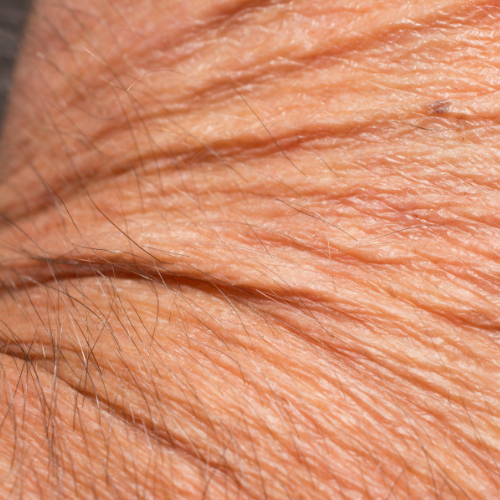
Crepey skin describes skin that has become thinner, less firm and more finely wrinkled, sometimes developing a slightly crinkled or paper-like appearance. It can become noticeable on the face and around delicate areas such as the eyes, but may also affect the neck, décolletage and areas of the body where skin has lost elasticity.
At Pure Perfection, treatment focuses on improving the quality and structure of the skin rather than simply filling individual lines. Depending on the area and degree of change, we may recommend treatments that support collagen production, hydration and regeneration to help the skin feel firmer, smoother and better supported.
What is Crepey Skin?
Crepey skin develops when the skin becomes thinner and loses some of the collagen, elastin and hydration that previously helped it remain smooth and resilient.
Unlike deeper wrinkles, crepey skin tends to involve multiple fine lines across a wider area. The skin may look slightly loose, finely wrinkled or less plump, particularly when it moves.
It is often associated with ageing, although sun exposure, hormonal changes and significant changes in weight can make it more noticeable.
What Causes Crepey Skin?
Collagen and elastin provide structure and elasticity within the skin. Production gradually changes with age, while the skin can also become thinner and less able to retain moisture.
Repeated UV exposure can accelerate the breakdown of collagen and elastin, which is why crepey changes are often particularly noticeable on areas regularly exposed to the sun, including the face, neck and décolletage.
Hormonal changes, particularly around menopause, can also affect collagen, hydration and skin thickness. Significant weight loss may contribute too, as reduced underlying volume can leave the skin looking looser and less supported.
Treatments for Crepey Skin at Pure Perfection
Treatment depends on where the crepey skin is located, how advanced the changes are and whether reduced hydration, collagen loss or laxity is the predominant concern.
Polynucleotides
Polynucleotides support the skin’s natural regenerative processes and can be particularly useful for thin, delicate or crepey skin. They may be considered for areas such as the under-eyes, where improving skin quality is often preferable to simply adding volume.
Profhilo®
Profhilo® combines hydration with a bioremodelling approach and may be considered when reduced elasticity, firmness and overall skin quality are contributing to a crepey appearance.
Sunekos®
Sunekos® can help support hydration, elasticity and skin quality. It may be particularly relevant for delicate areas where fine lines and thinning skin have become more noticeable.
PRP
PRP uses platelets and naturally occurring growth factors obtained from your own blood to support the skin’s regenerative processes. It may be incorporated into a treatment plan where collagen loss and declining skin quality are contributing to crepiness.
Skin Needling – XCellaris Pro Twist
Skin needling creates controlled micro-injuries that stimulate the skin’s natural repair response and collagen production. It can help improve fine lines, texture and overall skin quality.
Secret RF
Secret RF combines microneedling with radiofrequency energy to encourage collagen remodelling at controlled depths within the skin. It may be recommended where crepey texture occurs alongside more noticeable laxity or loss of firmness.
CO₂ Laser / Secret PRO
For more established textural changes, CO₂ laser or Secret PRO may be considered to provide a more intensive approach to skin resurfacing and collagen remodelling. Suitability depends on the treatment area, skin type and level of correction required.
Often, crepey skin benefits from a combination approach. We can assess whether the priority is hydration, regeneration, collagen stimulation or greater skin tightening and build treatment around those changes.
FAQs
Where does crepey skin commonly appear?
It can develop anywhere, but commonly becomes noticeable around the eyes, face, neck and décolletage, as well as areas of the body where the skin has become thinner or looser.
Can crepey skin be tightened?
Treatments that stimulate collagen and support skin remodelling can improve firmness and the appearance of mild to moderate crepey skin. The degree of improvement depends on the amount of laxity and the quality of the skin.
What is best for crepey skin around the eyes?
The under-eye area requires careful assessment because the skin is particularly delicate. Polynucleotides, Sunekos or PRP may be considered when improving thin, crepey skin is the main priority.
Can menopause cause crepey skin?
Hormonal changes during perimenopause and menopause can contribute to changes in collagen, hydration and skin thickness, which may make crepiness and reduced elasticity more noticeable.
Is crepey skin the same as loose skin?
Not exactly. Crepey skin refers primarily to thin, finely wrinkled skin with reduced elasticity, while skin laxity describes looseness or sagging. They can occur together and may sometimes benefit from treatments addressing both concerns.