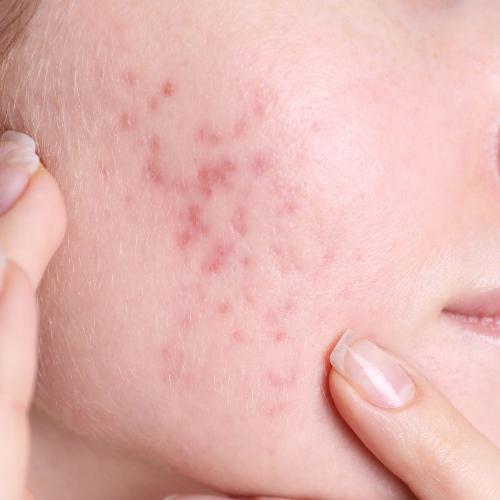
Acne and blemish-prone skin can affect you at almost any stage of life. Breakouts may appear as occasional spots and congestion or develop into more persistent blackheads, whiteheads and inflamed blemishes. Hormonal changes can also cause the skin to behave differently, which is why some people experience new or worsening breakouts during pregnancy.
At Pure Perfection, we look at the type of breakouts you are experiencing, your skin barrier, current skincare and any factors that may be contributing. Treatment can then focus on reducing congestion, supporting healthier skin and managing inflammation without unnecessarily overwhelming or irritating the complexion.
What is Acne & Blemish-Prone Skin?
Acne develops when hair follicles become blocked with excess sebum and dead skin cells. This can lead to blackheads, whiteheads and inflamed spots, including papules, pustules and, in more significant cases, deeper nodules or cysts.
Blemish-prone skin does not necessarily mean you have persistent acne. Some people experience occasional breakouts associated with hormones, skincare products, stress or other changes, while others have acne that requires longer-term management.
Pregnancy can also change the skin considerably. Hormonal fluctuations, particularly during the earlier stages of pregnancy, can increase oil production and contribute to new or worsening breakouts. At the same time, some of the ingredients and treatments commonly used for acne are not suitable during pregnancy, making an appropriate skincare plan particularly important.
What Causes Acne & Breakouts?
Acne is influenced by several interconnected factors, including excess sebum production, blocked follicles, inflammation and bacteria naturally present on the skin.
Hormones can have a significant influence on oil production, which is why breakouts may become more noticeable during puberty, around the menstrual cycle, pregnancy, perimenopause or other periods of hormonal change.
Genetics, stress, certain medications and unsuitable or overly heavy skincare products can also contribute. Picking or squeezing blemishes may increase inflammation and can raise the risk of persistent pigmentation and acne scarring.
Treatments for Acne & Blemish-Prone Skin at Pure Perfection
The right treatment depends on whether we are managing congestion, active inflammatory acne, excess oil, post-breakout marks or a combination of concerns. Pregnancy also changes which treatments and skincare ingredients are appropriate.
HydraFacial
HydraFacial combines cleansing, exfoliation and extraction to remove surface build-up and congestion while supporting hydration. It may be helpful for blemish-prone skin where blocked pores, blackheads and uneven texture are prominent concerns.
Extractions
Professional extractions can be used to carefully clear suitable blackheads and blocked pores. This can form part of a wider treatment plan for congested, blemish-prone skin rather than relying on squeezing or picking at home.
Obagi® Medical Skincare
A personalised Obagi skincare programme can be used to manage blemish-prone skin at home, with products selected according to your skin, the type of breakouts present and how well your skin tolerates active ingredients.
Consistent skincare is particularly important with acne because treatment is usually about ongoing management rather than relying solely on occasional in-clinic procedures.
Obagi Blue Radiance Peel
The Obagi Blue Radiance Peel may be considered for suitable blemish-prone skin to provide controlled exfoliation and help improve congestion, uneven texture and post-breakout discolouration.
Dermalux LED
Dermalux LED may be incorporated into a blemish-prone skin plan to support the management of inflammation and overall skin health. It is a gentle, non-invasive option that can complement other appropriate treatments.
Pregnancy-Safe Obagi Skincare
Pregnancy breakouts need a slightly different approach because certain commonly used acne ingredients, including retinoids, should be avoided during pregnancy.
A pregnancy-appropriate Obagi skincare routine can be selected to help manage congestion and breakouts while taking these restrictions into account. Rather than simply continuing your usual acne routine, we can review your products and recommend suitable alternatives during pregnancy.
Where acne is severe, painful, cystic, persistent or beginning to cause significant scarring, a dermatology assessment may be recommended. Medical management may be more appropriate before or alongside skin treatments.
FAQs
Can pregnancy cause acne?
Yes. Hormonal changes during pregnancy can increase sebum production and trigger new or worsening breakouts, even if your skin was previously relatively clear.
Can I treat acne while pregnant?
Yes, but the treatment plan needs to be adapted. Some ingredients and procedures commonly used for acne are not recommended during pregnancy, so your skincare and treatment options should be reviewed accordingly.
Why am I suddenly getting acne as an adult?
Adult breakouts can be influenced by hormonal changes, stress, skincare products, medications and other factors. If acne has appeared suddenly or is persistent, an assessment can help determine the most appropriate approach.
Should I have extractions for my spots?
Extractions are primarily used for suitable blackheads and blocked pores rather than every type of acne lesion. Inflamed or deeper spots should not simply be squeezed, as this can worsen inflammation and increase the risk of scarring.
When should I see a dermatologist for acne?
A dermatology assessment may be appropriate if acne is persistent, painful, cystic, causing scarring or not improving with an appropriate skincare and treatment plan.