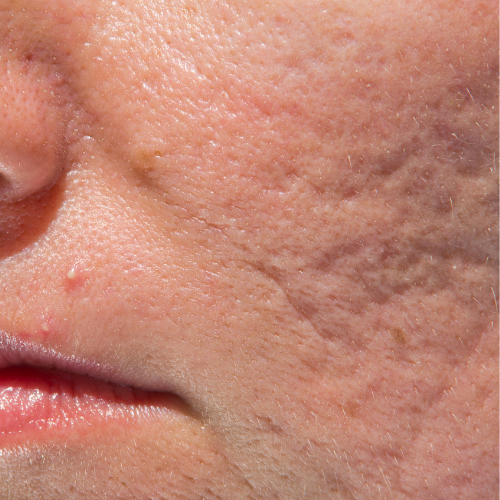
Acne can settle but leave changes behind in the skin long after active breakouts have improved. You may notice indentations, uneven texture, enlarged-looking pores or areas where the surface of the skin no longer feels as smooth as it once did. Red or brown marks can also remain after spots heal, although these are different from true acne scars.
At Pure Perfection, we assess the type and depth of acne scarring before recommending treatment. Different scars respond to different approaches, so treatment may focus on collagen stimulation, resurfacing or a combination of techniques to gradually improve texture and create smoother, more even-looking skin.
What is Acne Scarring?
Acne scarring develops when inflammation associated with acne disrupts the skin’s normal healing process and alters the structure of collagen within the affected area.
The most common facial acne scars are atrophic scars, which sit below the surrounding skin. These can include narrow, deeper ice-pick scars, wider boxcar scars and rolling scars that create an uneven or undulating texture.
Acne can also leave flat red, purple or brown marks after a breakout has healed. These are generally post-inflammatory colour changes rather than true scars, although it is common to have both scarring and discolouration at the same time.
What Causes Acne Scarring?
Inflammatory acne can damage tissue within the skin. As the area heals, insufficient or irregular collagen production can leave an indentation or change in texture.
Deeper and more inflammatory breakouts are generally more likely to scar, particularly nodules and cysts. Picking or squeezing spots can cause additional inflammation and tissue damage, increasing the likelihood of persistent marks and scarring.
Genetics also influence how the skin heals, which means some people are more prone to acne scarring than others even when their acne has been relatively similar.
Treatments for Acne Scarring at Pure Perfection
Acne scars vary considerably in depth and shape, so there is no single treatment that is right for every patient. Where active acne is still present, we may recommend bringing this under better control before beginning more intensive scar treatment.
Skin Needling – XCellaris Pro Twist
Skin needling creates controlled micro-injuries within the skin, stimulating a natural healing response and new collagen production. Over a course of treatment, this can help improve mild to moderate acne scarring, uneven texture and enlarged-looking pores.
Secret RF
Secret RF combines microneedling with radiofrequency energy delivered into controlled depths of the skin. This provides additional collagen stimulation and remodelling and may be considered for more established acne scarring or where scarring occurs alongside uneven texture and reduced skin firmness.
CO₂ Laser / Secret PRO
CO₂ laser resurfacing can provide a more intensive approach to acne scarring by creating controlled resurfacing and stimulating collagen remodelling.
Secret PRO combines technologies to address both the surface and deeper layers of the skin, making it an option for suitable patients with more established textural changes and acne scars. Treatment intensity and downtime are tailored according to the skin and degree of correction required.
PRP
PRP uses platelets and naturally occurring growth factors obtained from your own blood to support tissue repair and regeneration. It may be incorporated alongside collagen-stimulating procedures as part of a wider acne scarring treatment plan.
Laser Genesis
Laser Genesis may be considered where milder textural irregularities or residual redness accompany acne scarring. It offers a gentler approach to supporting collagen and improving overall skin quality.
The best approach may involve a course of treatment or carefully planned combination of technologies. During your consultation, we can assess the type, depth and distribution of your scars and establish what level of improvement can realistically be achieved.
FAQs
Can acne scars be completely removed?
Treatment can significantly improve the appearance and texture of acne scars, but it is not always possible to remove them completely. The degree of improvement depends on the type, depth and extent of the scarring and how your skin responds to treatment.
Which treatment is best for acne scarring?
It depends on the type of scar. Skin needling may be appropriate for milder textural scarring, while Secret RF or CO₂ laser resurfacing may be considered for deeper or more established changes.
Are acne marks the same as acne scars?
No. Flat red or brown marks left after acne are usually changes in skin colour rather than true scarring. Acne scars involve a structural change in the skin, such as an indentation or altered texture.
Can I treat acne scars if I still have active acne?
It may be better to bring active or inflammatory acne under control before beginning certain scar treatments. This can help reduce the risk of new scars developing while existing ones are being treated.
How many treatments will I need?
This varies according to the type and severity of scarring, the treatment selected and your individual response. Acne scarring often requires a course of treatment because collagen remodelling develops gradually.