
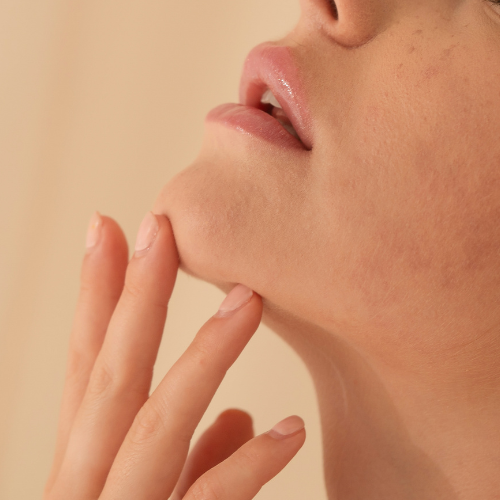
Chin dimpling can give the surface of the chin a puckered, uneven or ‘orange peel’ appearance, particularly when speaking, concentrating or making certain facial expressions. For some people it is only noticeable with movement, while for others the texture remains visible when the face is relaxed.
At Pure Perfection, we assess how the muscles of the lower face are moving as well as the shape and structure of the chin. Treatment can then be tailored to soften excessive dimpling while maintaining natural facial movement and balance.
What is Chin Dimpling?
Chin dimpling refers to the uneven or pebbled texture that can appear across the chin when the underlying mentalis muscle contracts.
The mentalis is an important muscle in the lower face and helps control movement of the chin and lower lip. When it contracts strongly, it can pull on the overlying skin and create multiple small indentations.
This is sometimes referred to as an ‘orange peel chin’ because of the characteristic texture it can create.
What Causes Chin Dimpling?
Chin dimpling is most commonly caused by repeated or excessive contraction of the mentalis muscle. Some people naturally have stronger muscle activity in this area, making the dimpling more noticeable.
Facial anatomy also plays a role. The shape and projection of the chin, the position of the lower lip and the way the muscles work together can all influence its appearance.
As skin quality and collagen levels change with age, the skin may also become less able to accommodate repeated movement, making existing dimpling or textural changes appear more prominent.
Treatments for Chin Dimpling at Pure Perfection
Treatment is personalised according to whether the concern is primarily caused by muscle activity, chin structure or a combination of the two.
Anti-Wrinkle Treatment
Anti-wrinkle injections can be used to temporarily reduce excessive activity within the mentalis muscle.
Carefully placed treatment can help relax the repeated contractions responsible for the puckered appearance, creating a smoother-looking chin while retaining natural movement. Because the muscles of the lower face work closely together, precise assessment and placement are particularly important in this area.
Dermal Fillers
Where the shape or projection of the chin is contributing to its appearance, dermal filler may be considered.
Strategically placed filler can provide structural support and improve chin shape and facial balance. It does not work in the same way as anti-wrinkle treatment, so the two may sometimes be considered together when both muscle movement and underlying structure are contributing to the concern.
Regenerative Skin Treatments
Where changes in skin quality are also making the chin appear less smooth, regenerative treatments such as polynucleotides, PRP or skin boosters may form part of a wider treatment plan.
These treatments focus on skin quality rather than directly reducing muscle movement and will only be recommended where they are relevant to what we see during your consultation.
FAQs
Why does my chin look dimpled when I move my mouth?
The appearance is often caused by contraction of the mentalis muscle beneath the chin. When this muscle contracts strongly, it pulls on the overlying skin and can create a puckered or uneven texture.
What is an orange peel chin?
‘Orange peel chin’ is an informal term used to describe the small dimples and uneven texture that can develop across the chin, often due to activity of the mentalis muscle.
Can anti-wrinkle injections treat chin dimpling?
Yes. Small amounts of anti-wrinkle treatment can be carefully placed into the mentalis muscle to reduce excessive contraction and soften the appearance of dimpling.
Do I need chin filler as well?
Not necessarily. If muscle movement is the main cause, anti-wrinkle treatment alone may be appropriate. Dermal filler may be considered when chin shape, projection or structural support is also contributing to the overall appearance.
Will treating chin dimpling affect my facial expressions?
Treatment is carefully planned to reduce excessive muscle activity rather than completely stop movement. Precise dosing and placement are particularly important around the lower face to maintain natural expression and function.