
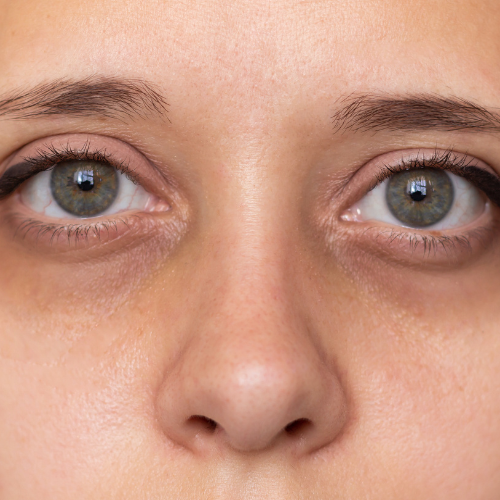
Hollowing beneath the eyes can create shadows that make the eye area look tired, even when you feel well rested. For some people, tear troughs are naturally more pronounced because of their facial anatomy. For others, they become increasingly noticeable as facial volume and skin quality change with age.
At Pure Perfection, the under-eye area is assessed carefully before treatment. What looks like a tear trough may be influenced by volume loss, cheek support, thin skin, pigmentation or puffiness, and these concerns do not all respond to the same approach. Treatment is therefore tailored to what is actually creating the hollow or shadow.
What Are Tear Troughs?
The tear trough is the natural groove that runs from the inner corner of the eye towards the upper cheek.
When this groove becomes deeper, it can create a visible hollow and shadow beneath the eyes. This can make dark circles appear more prominent and give the eye area a tired or sunken appearance.
The skin beneath the eyes is particularly thin and delicate, so changes in volume and skin quality can be more noticeable here than elsewhere on the face.
What Causes Hollow Eyes?
Genetics and facial anatomy play an important role. Some people naturally have deeper tear troughs or less volume beneath the eyes from a young age.
Ageing can make hollowing more noticeable as facial fat and underlying support change. Loss of volume through the mid-face and cheeks can also affect the transition between the lower eyelid and cheek.
The skin itself gradually becomes thinner and produces less collagen, which can make underlying structures and shadows more visible. Significant weight loss may also contribute to a more hollow appearance if facial volume is reduced.
Treatments for Hollow Eyes at Pure Perfection
The under-eye area requires a particularly considered approach. Not everyone with visible tear troughs is suitable for filler, and sometimes improving the surrounding skin or facial support is more appropriate.
Dermal Fillers
In carefully selected patients, hyaluronic acid dermal filler can be used to restore volume around the tear trough and create a smoother transition between the lower eyelid and cheek.
Treatment may not always involve placing filler directly beneath the eye. If reduced cheek or mid-face support is contributing to the hollowing, strategically restoring volume in these areas may provide a more balanced result.
Polynucleotides
Polynucleotides can be particularly useful when thin, crepey or ageing under-eye skin is contributing to the concern. Rather than adding volume, they support the skin’s regenerative processes and can help improve skin quality, hydration and elasticity.
PRP
PRP uses platelets and naturally occurring growth factors obtained from your own blood to support regeneration. It may be considered where improving the quality of delicate under-eye skin is the priority rather than replacing volume.
Sunekos®
Sunekos® can be used to support hydration, elasticity and skin quality in delicate areas. It may be considered where fine lines and changes in the quality of the under-eye skin accompany hollowing.
In some cases, combining improved facial support with regenerative skin treatment can provide a more appropriate result than attempting to fill the tear trough alone.
FAQs
Is a tear trough the same as dark circles?
Not necessarily. A tear trough is a hollow beneath the eye, while dark circles may be caused by pigmentation, visible blood vessels, thin skin or shadowing. Hollowing can create shadows that make dark circles appear more pronounced.
Can tear trough filler improve hollow eyes?
It can in carefully selected patients. Hyaluronic acid filler may restore volume and soften the transition between the lower eyelid and cheek, but not everyone is suitable for direct tear trough filler.
Can under-eye hollows be treated without filler?
Yes. If skin quality rather than volume loss is the main concern, treatments such as polynucleotides, PRP or Sunekos may be more appropriate. These treatments do not fill the hollow in the same way as dermal filler.
Why have my eyes become more hollow with age?
Changes in facial fat, bone structure, cheek support and skin quality can make the tear trough more noticeable over time. Weight loss can also contribute to reduced facial volume.
How do I know which under-eye treatment is right for me?
A consultation is particularly important for the eye area. We will assess the degree of hollowing, cheek support, skin quality and any puffiness or pigmentation before deciding whether filler, regenerative treatment or another approach is appropriate.