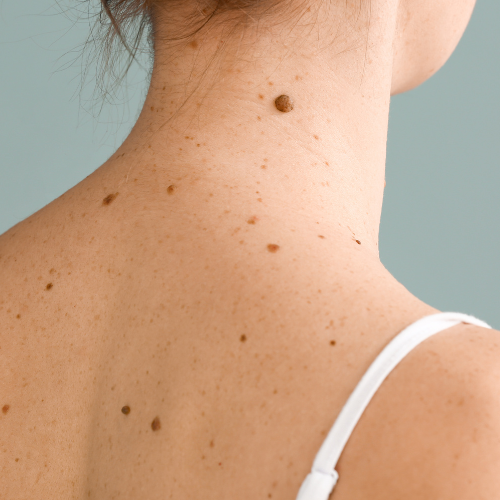
Skin lesions are extremely common and can include moles, warts, skin tags and other lumps, bumps or changes on the surface of the skin. Many are harmless, but because different lesions can sometimes look similar, it is important to establish what a lesion is before considering removal.
At Pure Perfection, skin lesions can be professionally assessed through our Dermatology service. Where a lesion is suitable for treatment, we can then recommend an appropriate removal method. If there is any uncertainty about the diagnosis or a lesion requires further investigation, the priority will always be appropriate medical assessment rather than cosmetic removal.
What Are Skin Lesions?
A skin lesion is a general term used to describe an area of skin that looks or feels different from the surrounding skin. Lesions can be raised or flat, pigmented or skin-coloured, and may develop for many different reasons.
Common lesions include moles, warts and skin tags. Moles are usually small areas of pigmented skin caused by clusters of pigment-producing cells. Warts are caused by certain strains of the human papillomavirus (HPV) and often have a rough or textured surface. Skin tags are small, soft growths that commonly develop in areas where the skin folds or rubs together.
Most of these lesions are benign, but a new or changing lesion should not simply be assumed to be harmless based on appearance alone.
What Causes Moles, Warts & Skin Tags?
Moles develop when pigment-producing cells called melanocytes grow in clusters. Some are present from childhood, while others develop over time. Genetics and sun exposure can influence the number and appearance of moles.
Warts are caused by HPV, which can enter the skin through small breaks in its surface. They can occur in different areas of the body and may sometimes spread through direct contact.
Skin tags are soft, benign growths that frequently develop where skin rubs against skin or clothing, including the neck, underarms and other skin folds. They become more common with age and may also be influenced by genetics and other factors.
Treatments for Skin Lesions at Pure Perfection
The appropriate approach depends on what the lesion is, where it is located and whether there is a clinical reason for further investigation.
Dermatology Assessment
Assessment is an important first step for moles and any lesion that is new, changing or difficult to identify.
Our Dermatology service allows suspicious or uncertain lesions to be assessed appropriately. If further investigation, biopsy or another medical pathway is required, this can be discussed rather than proceeding directly with cosmetic treatment.
Lesion Removal
Suitable benign lesions may be removed following assessment. The technique used will depend on the type, size and location of the lesion and the most appropriate approach for the individual.
Removal may be considered when a benign lesion is catching on clothing, becoming irritated or causing a cosmetic concern.
XEO Plus
For certain suitable superficial lesions or vascular changes, treatment using the XEO Plus platform may be considered following assessment. The appropriate technology is selected according to the type of lesion rather than treating all skin growths in the same way.
Not every mole, wart or skin tag is suitable for treatment within an aesthetic setting. If a lesion looks suspicious or requires further medical investigation, we will recommend the appropriate pathway instead.
FAQs
Can you remove moles at Pure Perfection?
Suitable benign moles may be considered for removal following appropriate assessment. Any mole that appears suspicious or requires further investigation should follow the appropriate medical pathway rather than being removed purely for cosmetic reasons.
Can skin tags be removed?
Yes, suitable skin tags can be removed. The most appropriate method depends on their size, location and appearance.
Can you treat warts?
Suitable warts may be assessed for treatment. Because warts are caused by a viral infection, the appropriate approach depends on the type, location and extent of the wart.
When should I get a mole checked?
A mole should be assessed if it is new or changing in size, shape or colour, or if it begins bleeding, crusting, itching or behaving differently from your other moles. Any lesion you are concerned about is also worth having professionally assessed.
Can you tell whether a skin lesion is cancerous by looking at it?
Appearance can provide important information, but a definitive diagnosis may require specialist assessment and, in some cases, further investigation such as a biopsy. Suspicious lesions should always be managed through an appropriate medical pathway.