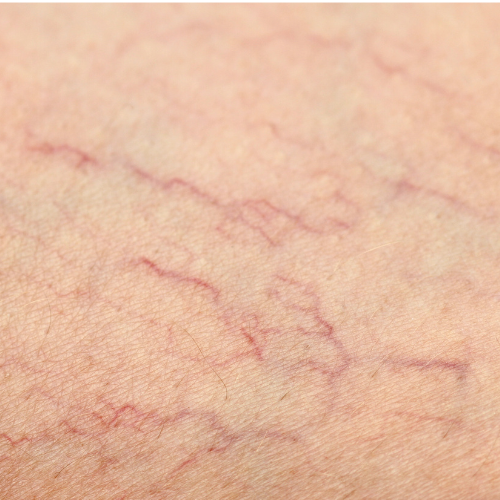
Thread veins are small, visible blood vessels that sit close to the surface of the skin. They may appear as fine red, purple or blue lines and can develop on both the face and body. Although they are usually harmless, they can become more noticeable over time and may be difficult to disguise.
At Pure Perfection, we offer different approaches depending on where the thread veins are located and how they present. This includes LimeLight IPL and XEO Plus for suitable facial vascular concerns, as well as sclerotherapy for thread veins on the legs.
What Are Thread Veins?
Thread veins, sometimes referred to as spider veins, are small dilated blood vessels that have become visible through the skin. They often form fine lines or branching patterns and can range in colour from red to purple or blue.
On the face, they are commonly seen around the nose and across the cheeks. On the body, thread veins frequently develop on the legs.
Thread veins are generally not a medical concern, but treatment may be considered when their appearance is bothering you. Larger, raised or symptomatic veins may require a different type of assessment and treatment.
What Causes Thread Veins?
There is not always one clear reason why thread veins develop. Genetics can play a role, which means you may be more likely to develop them if they run in your family.
Ageing can make vessels more visible as the skin changes, while repeated sun exposure can contribute to visible facial vessels. Hormonal changes, pregnancy and prolonged periods of standing can also be associated with the development of thread veins, particularly on the legs.
On the face, persistent redness and conditions such as rosacea may occur alongside visible vessels, so assessing the overall pattern of redness can help determine the most appropriate approach.
Treatments for Thread Veins at Pure Perfection
The treatment we recommend will depend largely on whether the veins are on the face or legs, as well as their size, depth and appearance.
LimeLight IPL
LimeLight IPL uses targeted light energy to address unwanted red and brown colour within the skin. It may be considered for facial redness and small visible vessels, particularly when thread veins occur alongside a generally uneven skin tone.
XEO Plus
XEO Plus provides advanced laser and light-based treatment options that can be tailored to vascular concerns. Depending on the type and location of the visible vessels, treatment can be used to target unwanted redness and thread veins while minimising the effect on surrounding skin.
Sclerotherapy
Sclerotherapy is used to treat suitable thread and vascular veins on the legs. A specialist solution is injected directly into the targeted vessel, causing it to close so that it can gradually be broken down and absorbed by the body.
Not every visible vein is suitable for cosmetic treatment. We will assess the vessels first and recommend the most appropriate option or advise if further medical assessment is required.
FAQs
Are thread veins the same as varicose veins?
No. Thread veins are small vessels close to the skin’s surface, whereas varicose veins are typically larger, swollen or raised veins. Larger or symptomatic veins may require specialist vascular assessment.
Can thread veins appear on both the face and legs?
Yes. They commonly develop around the nose and cheeks as well as on the thighs, calves and other areas of the legs. Different treatment methods may be used depending on their location.
What is the best treatment for facial thread veins?
This depends on the size, colour and pattern of the vessels. At Pure Perfection, LimeLight IPL or treatments available through XEO Plus may be considered for suitable facial vascular concerns following assessment.
Can sclerotherapy treat leg thread veins?
Yes. Sclerotherapy can be used for suitable thread and vascular veins on the legs. The vessels will be assessed beforehand to determine whether this is the appropriate treatment.
Can thread veins come back after treatment?
Successfully treated vessels can fade, but treatment cannot prevent new thread veins from developing in the future. Genetics, ageing, hormonal changes and other contributing factors can continue to influence their formation.